
If you live in a Philly rowhome or twin, you already know the kitchen has to work harder than the square footage suggests. Narrow rooms, tight stair turns, older wiring, and not-quite-square walls can turn “simple updates” into expensive surprises.
This kitchen remodel planning sheet approach keeps it practical: sort your wish list versus must-haves, capture the right measurements, and sanity-check local realities like permits, party walls, and historic review. Print one page, fill it in once, and bring it to every estimate.
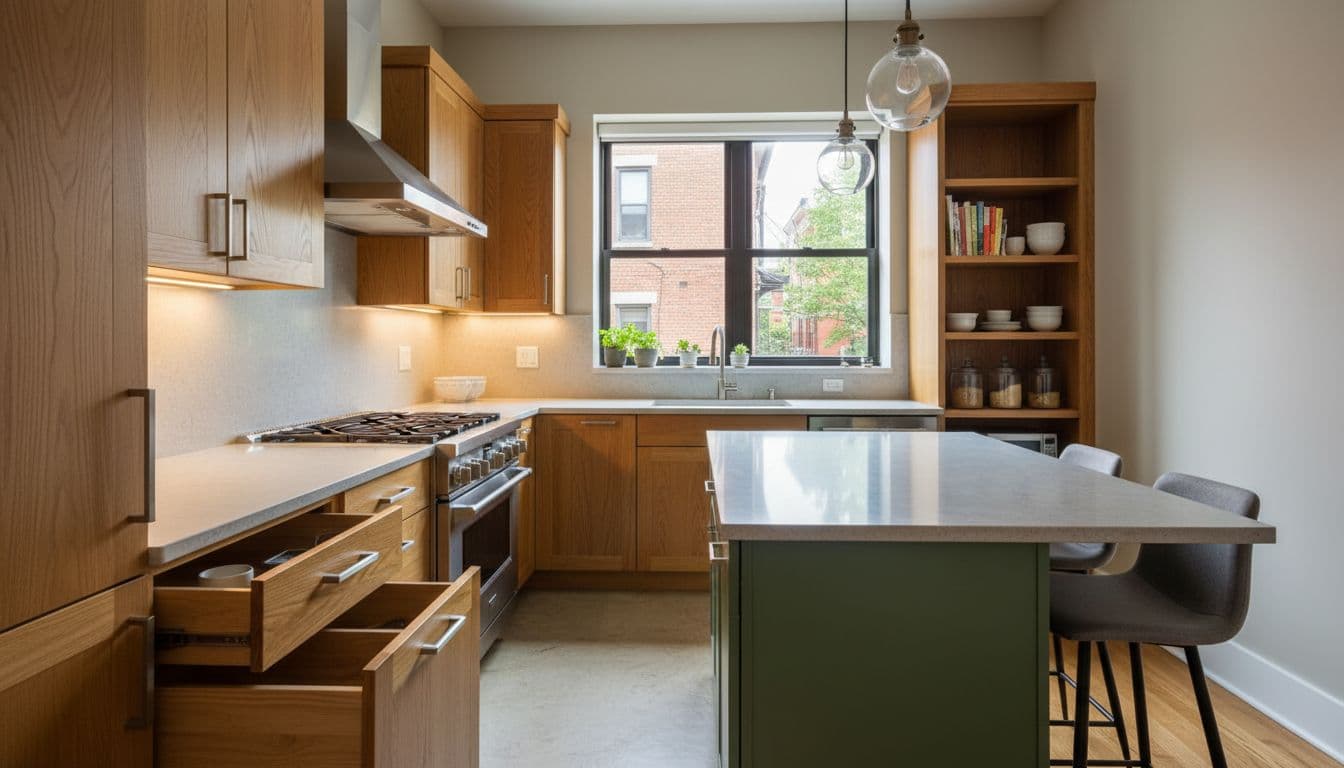
An example of a narrow rowhome kitchen layout with warm wood, a contrasting island, and task lighting, created with AI.
Start with three buckets on your sheet: must-haves, nice-to-haves, and splurges. Must-haves protect function, safety, and code. Nice-to-haves make daily life smoother. Splurges are the “wow,” but only after the basics are funded.
In many Philadelphia-area kitchens, hidden line items hit first: electrical upgrades for modern circuits, subfloor leveling, plumbing fixes, and real venting (especially if the current setup just recirculates). Put those in must-haves even though they aren’t pretty.
Style can live in the wish list. Early 2026 trends around Philly are warmer and calmer: natural wood tones, soft neutrals, colored islands, and quartz counters. Great choices, but they should never crowd out the unglamorous fixes.
Plan zones in a narrow kitchen: prep, cook, clean, store. If those collide, the room feels half its size.
On your sheet, mark these as non-negotiables: smart storage (pullouts, vertical trays, corner solutions), under-cabinet and task lighting, enough outlets where you actually work, durable floors, and an easy-clean backsplash. Add proper venting to the outside when possible, it helps with moisture and odors in attached homes. Do plumbing and electrical repairs before finishes, not after.
A tall pantry wall can beat a tiny closet pantry. A beverage or coffee station keeps traffic out of the cooking lane. Contrasting island color adds character without busy walls. If you want seating, note the overhang and where knees will go.
Also consider aging-in-place ideas now, not later: lever handles, wider paths, and comfort-height options. Then rank your top three splurges, if they don’t fit, they wait.
Measure twice, older Philly homes love surprise angles. Take photos, draw a quick sketch, and write dimensions directly on it.
Copy these into your planning sheet:
Note anything that blocks cabinets or steals inches: radiators, return vents, soffits, bulkheads, chimneys, beams, and where the stairs land (common in rowhomes). Measure the tightest delivery path too, including stair width and turns.
Aim for 36 to 42 inches of clear walkway around work areas. If two people pass often, 48 inches feels better. Standard counter height is about 36 inches. For island seating, plan about 15 to 18 inches of overhang.
For the work triangle, keep it comfortable and simple: sink to stove 4 to 9 ft, sink to fridge 4 to 7 ft, stove to fridge 4 to 6 ft, total under about 26 ft.
In Philadelphia, permits often kick in when you move or add electrical, plumbing, gas, change the layout, or touch anything structural. Philadelphia L&I is the gatekeeper, and historic districts can add a separate Historical Commission review before L&I will approve the permit.
Rowhome party walls and tight access can affect demo, debris removal, and appliance delivery, so bring that up early. Once construction starts, many kitchens land in an 8 to 12 week range, with design, demo and rough-ins, then install and finish work.
A solid planning sheet is simple: your top three must-haves, top three wish list items, a budget range with hidden fixes included, measurements captured (room, openings, obstacles, utilities), and permit questions written down. Hand that page to a Philly-area contractor or designer and you’ll get faster, more accurate estimates, with fewer surprises once the walls open.